
Not all is well in Brussels
All’s well that ends well. There is a temptation to sum up the resolution of the European Union’s personnel-finding troubles in such a Shakespearean way. Read more
Oliver is the Executive Director of The New Zealand Initiative. Before joining the Initiative, he was a Research Fellow at the Centre for Independent Studies in Sydney, the Chief Economist at the Policy Exchange in London, and an advisor in the UK House of Lords.
Oliver holds a master's degree in economics and business administration and a PhD in Law from Bochum University in Germany.
Oliver is available to comment on all of the Initiative’s research areas.
Phone: +64 4 499 0790
All’s well that ends well. There is a temptation to sum up the resolution of the European Union’s personnel-finding troubles in such a Shakespearean way. Read more
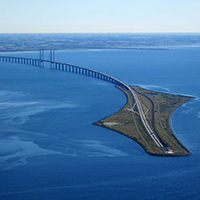
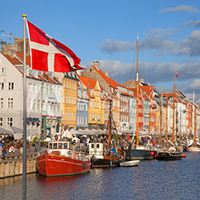
In late June, the Initiative took a delegation of our members to Copenhagen. For a week, more than three dozen New Zealand business leaders traveled Denmark and South Sweden. Read more
Next week, The New Zealand Initiative will be taking a delegation of more than three dozen senior business leaders to Copenhagen. Our members want to study and experience first-hand what makes Denmark one of the world’s most successful small countries. Read more
English is not my native language – not that you can tell by my German name or accent. I did learn the language, but the journey was most unusual. Read more
Denmark last Wednesday elected a Social Democrat-led government – so what else is new? Along with its Scandinavian neighbour Sweden, Denmark is the quintessential social democracy. Read more
New Zealand attracted global attention after unveiling a "world-first" well-being budget. It's based on priorities such as mental health and child poverty instead of the usual growth and jobs. Read more
Winston Peters’ comments on the 30th anniversary of the Tiananmen Square massacre were candid. Where Western politicians have turned not upsetting China over its human rights record into an art form, the Foreign Minister left diplomatic niceties behind. Read more
Ordinary elections are simple. Once the votes are counted and the number of seats in Parliament determined, you know who will govern for the coming years. Read more
Judging by the reactions of the twittersphere, something evil must have happened in Australia last Saturday. “I’m scared. Read more
Earlier this year, I got myself a new smartphone. Its 7-nanometre processor is lightning fast, the triple camera takes stunning pictures, and the huge battery is still half full at the end of a working day. Read more
During the Global Financial Crisis, many banks around the world failed spectacularly (though fortunately none in Australia or New Zealand). Some financial institutions were bailed out at enormous costs to taxpayers. Read more
The problem with being an expert is that people regularly ask you for predictions. As if your knowledge of something would automatically let you know the future. Read more
It took the Australian Government years to decide whom to task with building its next generation submarine fleet. It was still not enough time to prepare them for the cultural clash that followed. Read more
When US psychologist Jonathan Haidt published The Righteous Mind in 2012, he himself may not have known how prescient it would be. The book’s subtitle is Why Good People Are Divided by Politics and Religion. Read more
Late last year, embattled Chancellor Angela Merkel resigned the leadership of her Christian Democrat CDU party and announced she would not seek a fifth term. After a tight contest, the party’s general manager Annegret Kramp-Karrenbauer succeeded Merkel as leader. Read more