How dismal is economics?
Allegedly economics is the ‘dismal science’. Indeed, if you believe the wife of one of the economists in our team, you should avoid the company of economists like the plague. Read more
It is an utterly ironic situation for Europe. Every bit of bad news for its economies is good news for asset markets. Read more
Wellington (25 August 2014): National’s Homestart policy will fuel higher house prices and make it harder for Kiwis to enter the housing market, according to economic think-tank The New Zealand Initiative. Executive Director Dr Oliver Hartwich says any housing policy aimed at making housing more affordable must start by increasing supply. Read more
Empty Nests, Crowded Houses: Building for an ageing population describes what could develop in the future housing market if the current rate of construction fails to increase. The report is based on demographic projections which predict that under a range of scenarios, the population is likely to be larger and older. Read more
Wellington (22 August 2014): New Zealand faces a chronic housing shortage the size of three major cities within 20 years, according to a new report from the New Zealand Initiative. The report claims claims the country could reach a shortage of 113,800 houses by 2031 and official figures underestimate the scale of the crisis. Read more
We live in a time of immediate gratification, and at election time, political parties love to pander to what we want, right now. A recent 3 News Reid Research poll asked voters what they prefer for education. Read more
Adam Smith explained how the division of labour is limited by the extent of the market. When we have more people with whom to trade, we can all better specialise in our areas of comparative advantage. Read more
Once upon a time, when we were hunter-gatherers, life was poor, nasty, brutish and short (to quote Thomas Hobbes). But life was also very simple: Whatever had been hunted or gathered by a tribe had to be divided among them. Read more
Last week I wrote that the euro crisis was not over -- far from it (The calm before the eurozone storm, 14 August 2014). However, having just read the latest article by Wolfgang Münchau, a fellow eurozone commentator and Financial Times columnist, I have to agree with his suggestion that we should no longer call it the euro 'crisis'. Read more
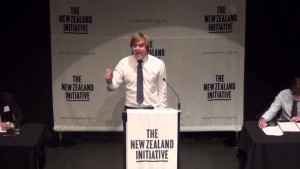
Watch University of Canterbury and University of Auckland battle over the moot: Commemorations of past wars are nationalistic exercises in war glorification. We'll have panellists Stephen Franks of Franks Ogilvie and Executive Director of The New Zealand Initiative Dr Oliver Hartwich. Read more
Democracy is a very fine thing, yet is worth dying for, and it is humbling to think of all those who have. Yet general election campaigns do not bring the populace's best instincts to the fore. Read more
Imagine you are at a speed dating event, circling a room filled with people who, like yourself, are looking for love. The problem is, that besides a clutch of banal questions and answers, you have very little information to go on in deciding who is worth asking out on a longer date. Read more
It is a fine line between commemorating and glorifying wars. The centenary of World War I is a good opportunity to reflect what this war, and other wars, mean to us today. Read more
A few weeks ago, while browsing pianos on TradeMe, I came across a Kawai upright with bids having just passed the reserve price of $4,000. An interested buyer had posted a public question to the seller offering to ‘buy now’ for $1,500, stating they ‘really wanted’ the piano but ‘couldn’t afford’ the minimum $4,000. Read more