High hurdles deter foreign investors
Click image for larger view.
Read more
31 August, 2012


Click image for larger view.
Read more
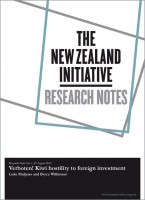
Key points As measured by the OECD's FDI Regulatory Restrictiveness Index and analysed by The New Zealand Initiative: New Zealand has the sixth most restrictive FDI regime in the world New Zealand has the most restrictive FDI regime in manufacturing New Zealand runs the third-most restrictive FDI regime in restaurants and hotels Almost all of New Zealand's restrictiveness comes from screening processes - bureaucrats and ministers assessing how 'good' an investment is going to be for New Zealand, despite their poor incentives and lack of commercial knowledge. Of the 55 countries the OECD measured for FDI restrictiveness, 35 do not even have screening tests In addition: The 'sensitive land' and 25% ownership clauses in the Overseas Investment Act catch virtually any reasonably sized direct overseas investment Over the past 15 years, many other nations have substantially liberalised their overseas investment regimes, leaving New Zealand in a less competitive position to attract FDI Since 1993, the amount of FDI New Zealand attracts has trended down by 2% per decade, although the relationship is suggestive rather than robust at this point All New Zealanders can be expected to bear the cost of these foreign investment barriers through lower property values, a higher cost of capital, and weaker economic growth. Read more

New Zealand operates one of the most restrictive foreign investment regimes in the developed world, missing out on much needed investment, says a new Research Note from The New Zealand Initiative. In Verboten! Read more
New Zealand operates one of the most restrictive foreign investment regimes in the developed world, missing out on much needed investment, says a new Research Note from The New Zealand Initiative. In Verboten! Read more
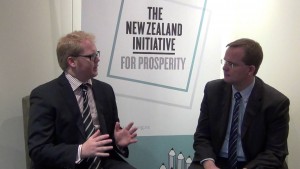
New Zealand operates one of the most restrictive foreign investment regimes in the developed world, missing out on much needed investment, says a new Research Note from The New Zealand Initiative. Read more
Have you ever heard of Alexander Dobrindt? He must be a member of Superheroes Anonymous because the provincial politician has just taken on the "most powerful woman in the world”, Angela Merkel. Read more

Regulation is a means to an end, not an end in itself. Some regulation is necessary as it can either set out the rules of the game in society or attempt to influence people to make better choices. Read more
Population growth is always an issue of intense debate, bouncing between a nation’s acceptance (and need) for migrants and an anti-foreigner sentiment. New Zealand and Australia are both typical and similar in this regard – both have relatively low populations for their size. Read more
New Zealand’s leaky building saga has shaken public confidence in both the building industry and the regulatory competence of government. The growth of the Certified Builders Association of New Zealand (CBANZ) is an example of a market response to the problem. Read more
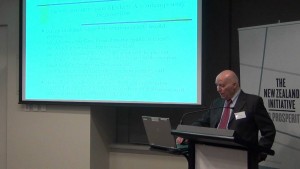
The New Zealand Initiative is delighted to host ex-IMF director and world authority on fiscal policy, Vito Tanzi. A former Italian finance minister, Dr Tanzi is an economist of international renown with expertise in taxation, economic development, and macroeconomics. Read more
After three years of the euro crisis, and despite numerous summits, various acronymed bailouts, and countless solemn pledges to save Europe’s common currency, we are nowhere closer to a solution than at the outset. The euro’s troubles have every chance of joining poverty in Sub-Saharan Africa, violence in the Middle East and North Korea’s nuclear program as a standard feature of the world in which we live: unpleasant, dangerous and yet seemingly unalterable. Read more
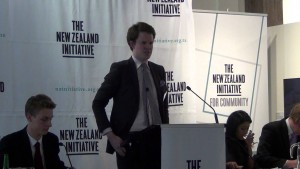
Watch the University of Auckland and Victoria University of Wellington battle it out with the moot: This house believes that we need higher taxes on the rich. Read more
Economics students generally learn how to deal with recessions in their first semester. To cushion the economy in a downturn and speed up the recovery, students are taught to cut interest rates and provide fiscal stimulus. Read more
Global food security is an increasing challenge. A growing middle class in developing countries are demanding more protein. Read more
In the cult TV comedy Arrested Development, a character called Tobias Funke starts a folk band called “Dr Tobias Funke’s 100% good-time family band solution.” He and his family travel to medical conferences singing folk tunes persuading people to buy a lifestyle drug produced by a big pharma called Teamocil. Unfortunately, the sense of wellness in relationships created by Teamocil turns out to be the first sign of complete pituitary shutdown. Read more