ResearchEd 2026
In 2013, Scottish teacher Tom Bennett realised that his training had not well prepared him for the classroom. He had not even been taught basic classroom management skills. Read more
You searched everything for "" and got 626 results
In 2013, Scottish teacher Tom Bennett realised that his training had not well prepared him for the classroom. He had not even been taught basic classroom management skills. Read more
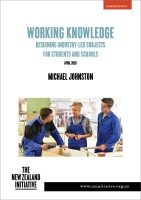
A heavy diesel mechanic earns roughly the same as a policy analyst, qualifies in the same time and graduates with little or no debt. Yet most New Zealanders still regard university as superior to industry training and our school qualifications system has quietly reinforced that bias for decades. Read more
Wellington (Tuesday, 28 April 2026) - A heavy diesel mechanic earns roughly the same as a policy analyst, qualifies in the same time and graduates with little or no debt. Yet most New Zealanders still regard university as superior to industry training and our school qualifications system has quietly reinforced that bias for decades. Read more
New Zealand’s university leaders seem restless. In recent months, Massey, Victoria, Canterbury and Auckland Universities have all advertised for new Vice Chancellors (VCs). Read more
In this episode, Michael speaks with Professor Elizabeth Rata about the history of New Zealand's school system. The conversation challenges the contemporary narrative of 19th-century schools as authoritarian and oppressive. Read more
In this episode, Michael talks to Lynda Knight, principal of Glenview School in Porirua, about how understanding the neuroscience of stress and trauma transformed her school's approach to dysregulated behaviour. They discuss why a felt sense of safety, strong relational connections and teacher self-regulation are essential foundations for learning, and what schools and policymakers can do to better support children experiencing stress and trauma. Read more
Dr Michael Johnston talked to Emile Donovan on Nights on RNZ about the Ministry of Education's plan not to build any new single-sex state schools, arguing that while co-education has clear social benefits, a blanket ban removes choice, particularly for families who can't afford private alternatives. Dr Johnston noted that his research found single-sex schools showed better academic results on average for both sexes, especially for Māori and Pasifika boys and boys from lower socioeconomic communities. Read more
In this episode, Michael talks with Dr James Kierstead about the pressures on academics to align with universities’ institutional priorities, including expectations to incorporate Māori and Pasifika perspectives in all teaching programmes. The discussion raises questions about academic freedom, institutional neutrality, and accountability, illustrated by the circumstances surrounding Dr Kierstead’s redundancy from Victoria University of Wellington. Read more
In this episode, Michael Johnston speaks with Kaaryn Cater of MindWise Connection about sensitivity – a temperamental trait that makes some people more affected by their environment. They explore why open-plan classrooms can overwhelm highly sensitive children, how social cues and sensory stimuli shape learning, and practical strategies teachers and workplaces can use to reduce overload and better support highly sensitive people. Read more
In many countries, an educational study claiming a radical improvement in mathematics learning would receive considerable media attention. But not, it seems, in New Zealand. Read more