The Emissions Trading Scheme FAQ
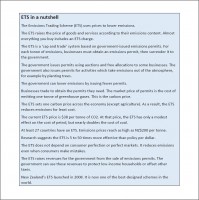
The Emissions Trading Scheme (ETS) uses prices to lower emissions. The scheme launched in New Zealand in 2008 and it is now one of the best-designed schemes in the world. Read more
You searched , Publications for "" and got 36 results
The Emissions Trading Scheme (ETS) uses prices to lower emissions. The scheme launched in New Zealand in 2008 and it is now one of the best-designed schemes in the world. Read more
In our submission to the Climate Change Commission on the draft emissions budget, we support the commitments to emissions targets under the Paris agreement and to net zero emissions from 2050. We have two overarching recommendations that we explain in the submission: 1. Read more
The year 2020 was one none of us will forget in a hurry. Lives were put on hold. Read more
Thanks to the work of successive climate change ministers from David Parker to James Shaw, New Zealand has a world-leading Emissions Trading Scheme (ETS). We should rely on it to drive down our carbon emissions, argues the Initiative’s executive director Dr Oliver Hartwich. Read more
At the end of October, governor of the Reserve Bank Adrian Orr boldly asserted in a speech that climate change is “a key risk to global financial stability.” He made the case for urgent “transformation” as an “important, imminent, and personal” issue. Although the Reserve Bank Act does not mention climate change, the RBNZ is responsible for financial stability. Read more
New Zealand faces its worst recession in nearly a century. Unfortunately, the economic response to the challenges of Covid-19 leaves much to be desired. Read more
Read our submission, written by Dr Bryce Wilkinson, to the Ministry of Business, Innovation and Employment on the Review of the Crown Minerals Act 1991. This submission addresses itself exclusively to the questions raised in chapter 1 of the Discussion Document about the role and purpose of the Crown Minerals Act (CMA). Read more
New Zealand could be a leader in global emissions reduction. We could lower global emissions by far more than we contribute. Read more
The Interim Climate Change Committee (ICCC) has delivered a landmark report, according to our new policy paper, When the facts change: How the ICCC saved New Zealand from a policy disaster. Analysis by the Interim Committee found the Government’s 100% renewable electricity policy would hike power prices and potentially deliver worse environmental outcomes. Read more
Read our submission to the Environment Committee on the Climate Change Response (Zero Carbon) Amendment Bill. Read more